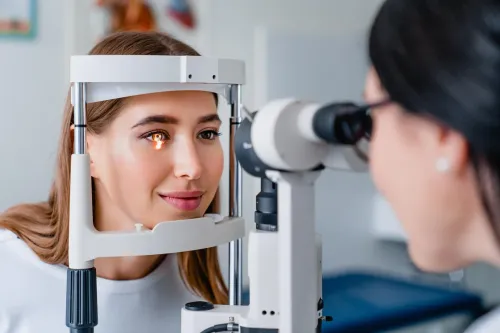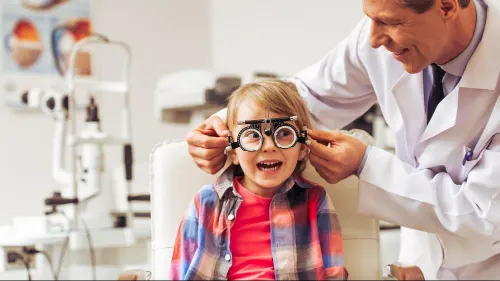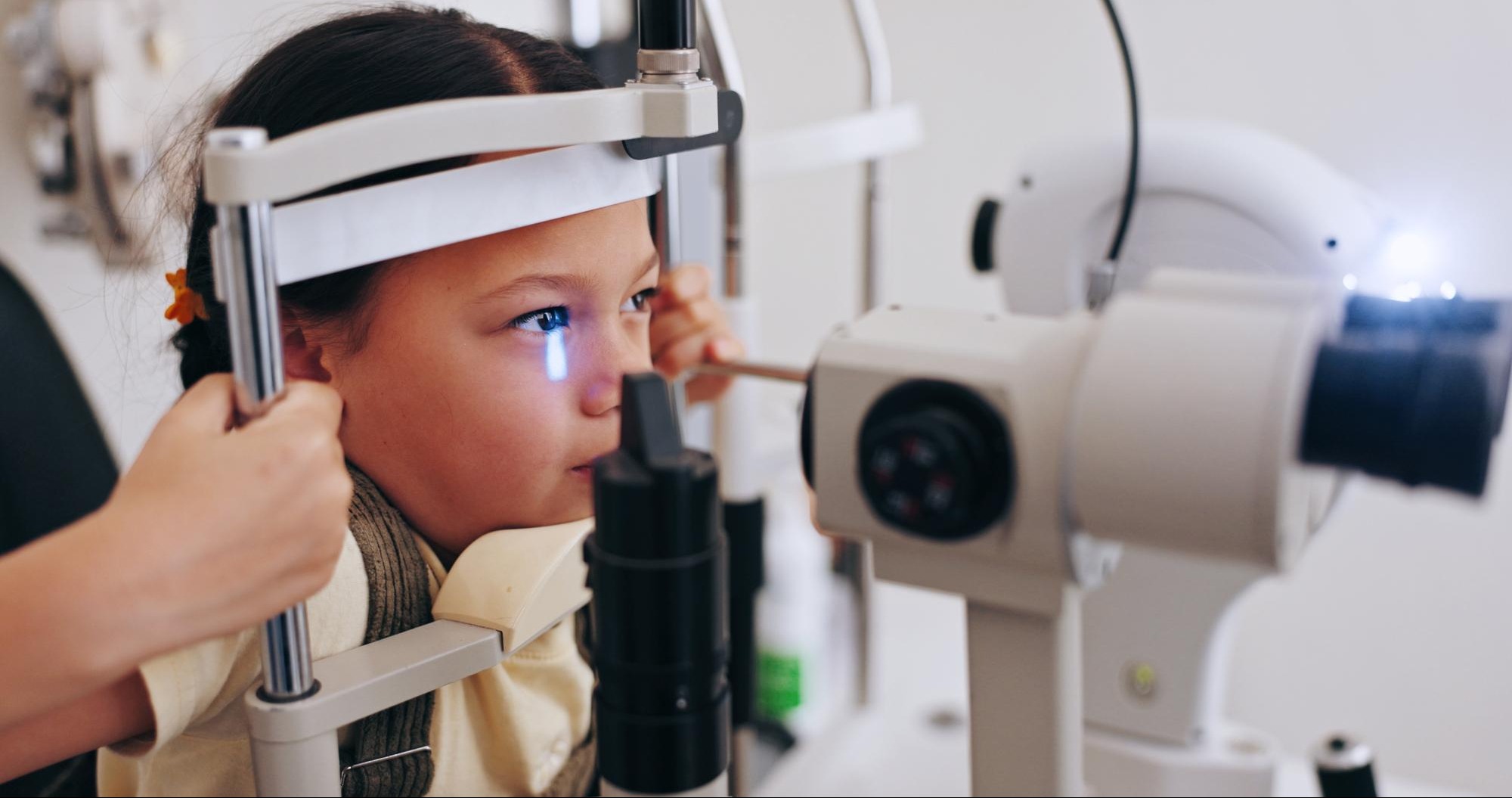
Choosing eye care for a child involves more than finding a place that performs routine vision checks. Children's eyes are still developing, while the way specialists assess young patients can differ significantly from a standard adult consultation.
Parents evaluating a Pediatric Eye Clinic in Chunabhatti should look at clinical capability, child-focused assessment, communication, follow-up planning, the range of conditions evaluated.
Look for Experience With Childhood Eye Problems
Children can develop refractive errors, amblyopia, strabismus, congenital eye conditions, blocked tear ducts, eyelid problems, other visual concerns.
A clinic assessing children should be comfortable evaluating age-specific eye conditions rather than treating the consultation as a smaller version of an adult examination.
This becomes particularly important when a child cannot reliably read an eye chart or describe symptoms.
Check How Vision Is Assessed in Young Children
A common concern among parents is whether an eye examination is possible when a child cannot read letters.
Eye specialists can use age-appropriate methods. Pictures, symbols, matching techniques, fixation behaviour, objective measurements may be used depending on the child's age plus cooperation.
The ability to communicate clearly with children can make the examination less stressful while helping the clinician obtain useful findings.
Consider Whether Dilated Examination Is Available
Dilating drops may sometimes be recommended during a pediatric eye assessment.
They can help the ophthalmologist examine internal eye structures. Certain drops can also temporarily relax the focusing system, allowing a more accurate assessment of refractive error in children when clinically appropriate.
Parents should feel comfortable asking why dilation is being recommended plus what temporary effects to expect.
Ask How Squint Is Evaluated
Eye alignment concerns require more than simply observing whether an eye looks straight.
A detailed assessment may examine
- Alignment at different viewing distances
- Eye movements
- Vision in each eye
- Spectacle power
- Binocular function
- Presence of amblyopia
- Pattern of deviation
Treatment recommendations depend on the findings.
Pay Attention to Communication With Parents
A good pediatric consultation should leave parents understanding the problem.
The specialist should be able to explain what was found, whether spectacles are required, whether patching has a role, when follow-up is needed, whether further investigation is appropriate.
Parents should also understand what signs warrant an earlier review.
Clear communication becomes especially valuable when treatment requires cooperation at home.
Evaluate Follow-Up Capability
Some childhood eye conditions require repeated monitoring rather than a single visit.
Amblyopia treatment, changing spectacle prescriptions, eye alignment problems, certain congenital conditions may require periodic assessment.
For this reason, parents may benefit from choosing a clinic where follow-up can remain consistent over time.
Prepare Questions Before the Visit
Useful questions include
- Is my child's vision appropriate for age?
- Does each eye see equally well?
- Is there a significant refractive error?
- Is the eye alignment normal?
- Does my child need spectacles?
- Is patching necessary?
- When should the next examination occur?
- What changes should we watch for at home?
Writing questions beforehand can help parents make better use of consultation time.
For families considering Dr Seema Pallawkar - Neurovue Eye Clinic in Chunabhatti, the decision should be based on the child's specific visual concern plus the type of evaluation required.
A suitable pediatric eye clinic should make the assessment understandable for parents while keeping the examination appropriate for the child's age. The objective is not simply to obtain a spectacle number. It is to evaluate visual development carefully, identify potential problems, then establish appropriate follow-up where necessary.
Keywords